
Meet Ashanthi Gajaweera, MD
I spent more than 25 years as a neurologist and have been the "dementia doctor" to thousands of patients.
Patients would sit across from me after a diagnosis of Alzheimer's disease and ask the same question: could this have been prevented? Their families would wonder — what can I do to make sure this doesn't happen to me? In fact, I saw it in my own family and asked the same question.
But traditional medicine is structured around reactive care. Prevention gets a cursory mention — eat better, sleep more, exercise. It isn't wrong. But we can do so much better.
That is what led me to build Healthspan Neurology.
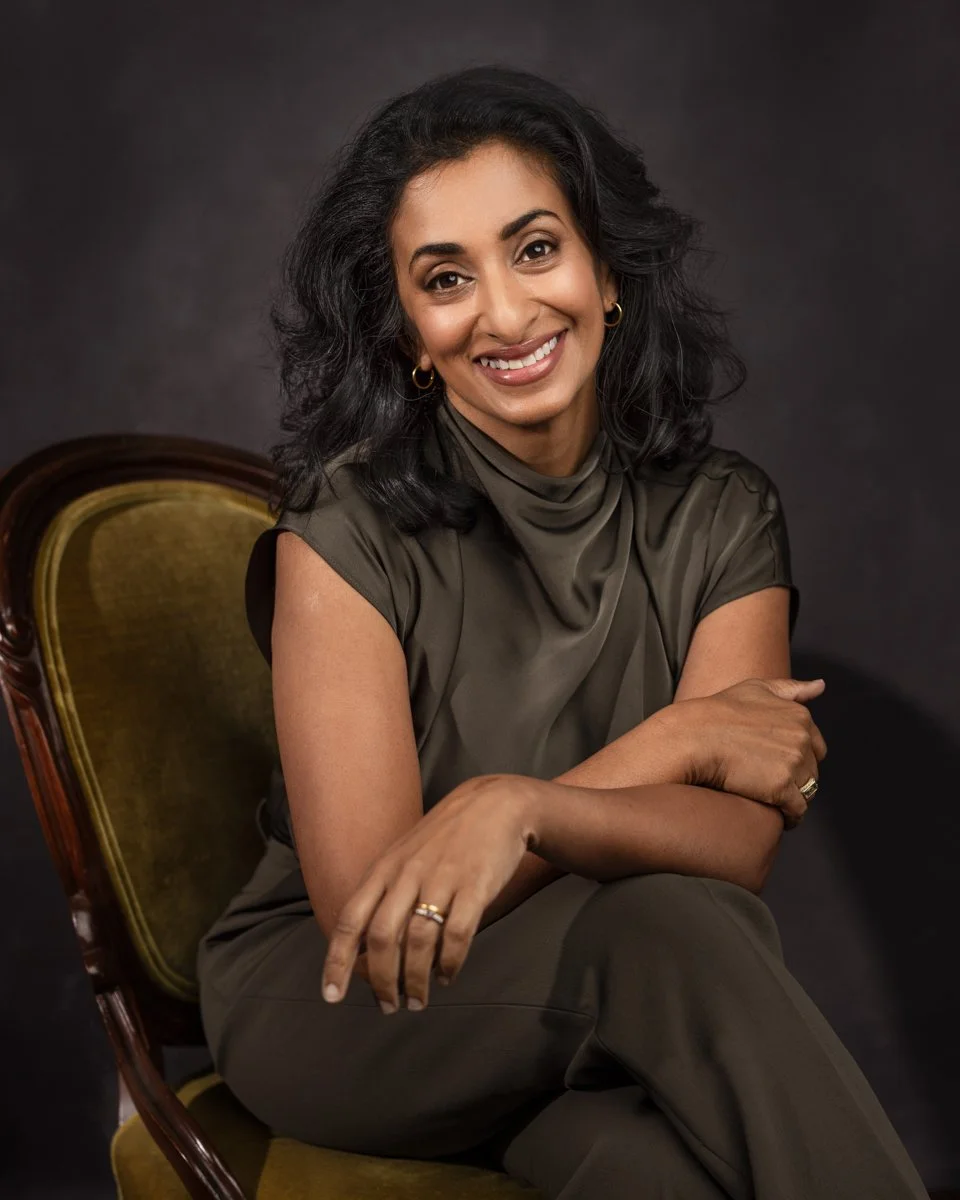
Why I Started Healthspan Neurology
We now know that the brain changes leading to Alzheimer's disease begin 20 to 30 years before the first symptom. We know that the majority of dementia cases are preventable. And we know that women make up two-thirds of dementia cases — and that the menopausal transition is a critical neurologic window that influences long-term brain health.
The science and research in the field of dementia prevention is growing every day. It’s just not getting to mainstream medicine.
It's hard to know all this — and to have been a dementia doctor to thousands of patients — and not do something about it. I built Healthspan Neurology to be the specialist you'll see so that hopefully, you won't need that dementia doctor.
How I Think About the Brain
Before I was a neurologist, I trained as an engineer.
I studied mechanical engineering at MIT, and that mindset never left me. I still think in systems - where are the failure points, what are the inputs and outputs, and what happens upstream when something goes wrong downstream. When I evaluate a patient's brain health, I'm not looking at one variable in isolation — I'm looking at the whole system.
The brain is the most energy-demanding organ in the body. It makes up roughly 2% of body weight but consumes nearly 20% of the body's energy at rest. It is exquisitely sensitive to disruptions in sleep, metabolism, hormones, cardiovascular function, and inflammation. Understanding those connections — and addressing them systematically — is the foundation of everything I do at Healthspan Neurology.
Women's Brain Health
One area where the gap between what we know and what patients receive is particularly striking is women's brain health.
Women are nearly twice as likely as men to develop Alzheimer's disease. The biology behind that disparity goes beyond our longer lifespans. It runs through menopause — through the neuroprotective role of estrogen, through the metabolic and vascular changes that accompany its decline, through years of symptoms that are frequently dismissed or undertreated.
As one of a small number of board-certified neurologists in the country who is also a Menopause Society Certified Practitioner, I bring a neurologic lens to menopause care that most patients never have access to. The menopausal transition is not a gynecologic inconvenience. It is a neurologic event with long-term consequences — and it is one of the most important windows we have for Alzheimer's prevention in women.
My Commitment to This Work
Healthspan Neurology is a small, deliberately designed practice. I see fewer patients than I did in traditional practice, and I spend far more time with each one. That is not a limitation — it is the point.
Every patient who walks through my door — or logs on from across New York State — gets a neurologist who read their records, thought carefully about their case, and has no interest in moving them through quickly. The goal is not to manage your symptoms. It is to understand your brain, identify your risks, and help you do something about them before they become your diagnosis.
That is what I built Healthspan Neurology to do. I'm glad you found me.
Education and Medical Training
BS Mechanical Engineering — Massachusetts Institute of Technology
MD — University of Rochester School of Medicine, Rochester NY
Internal Medicine Internship — University of Rochester, Rochester NY
Neurology Residency — Emory University, Atlanta GA
Chief Resident in Neurology — Emory University
Fellowship in Clinical Neurophysiology — Emory University
Board Certification and Advanced Training
Diplomate, American Board of Psychiatry and Neurology
The Menopause Society Certified Practitioner (MSCP)
Medical Acupuncture Certification (Helms Institute) & NY State License
Advanced Certification in Mind-Body Medicine, Center for Mind Body Medicine
Advanced Training in Menopausal Hormone Therapy (Heather Hirsch Academy)
Clinical Experience in Rochester, NY
Founder & Medical Director — Healthspan Neurology, PC (2025–Present)
Physician — Neurology Associates of Rochester (2003–2024)
Managing Partner — Neurology Associates of Rochester (2010–2024)
Academic and Professional Affiliations
Clinical Assistant Professor of Neurology — University of Rochester School of Medicine
Vice President, New York State Direct Care Physicians Alliance
Board Member — Monroe County Medical Society
Member — American Academy of Neurology
Member — The Menopause Society
Medical License — New York State
Getting Started
Your first step is a complimentary Introductory call—an opportunity to discuss your goals, review your concerns, and explore whether the Cogntive Longevity Program or Mind Over Menopause™ is the right fit for you.